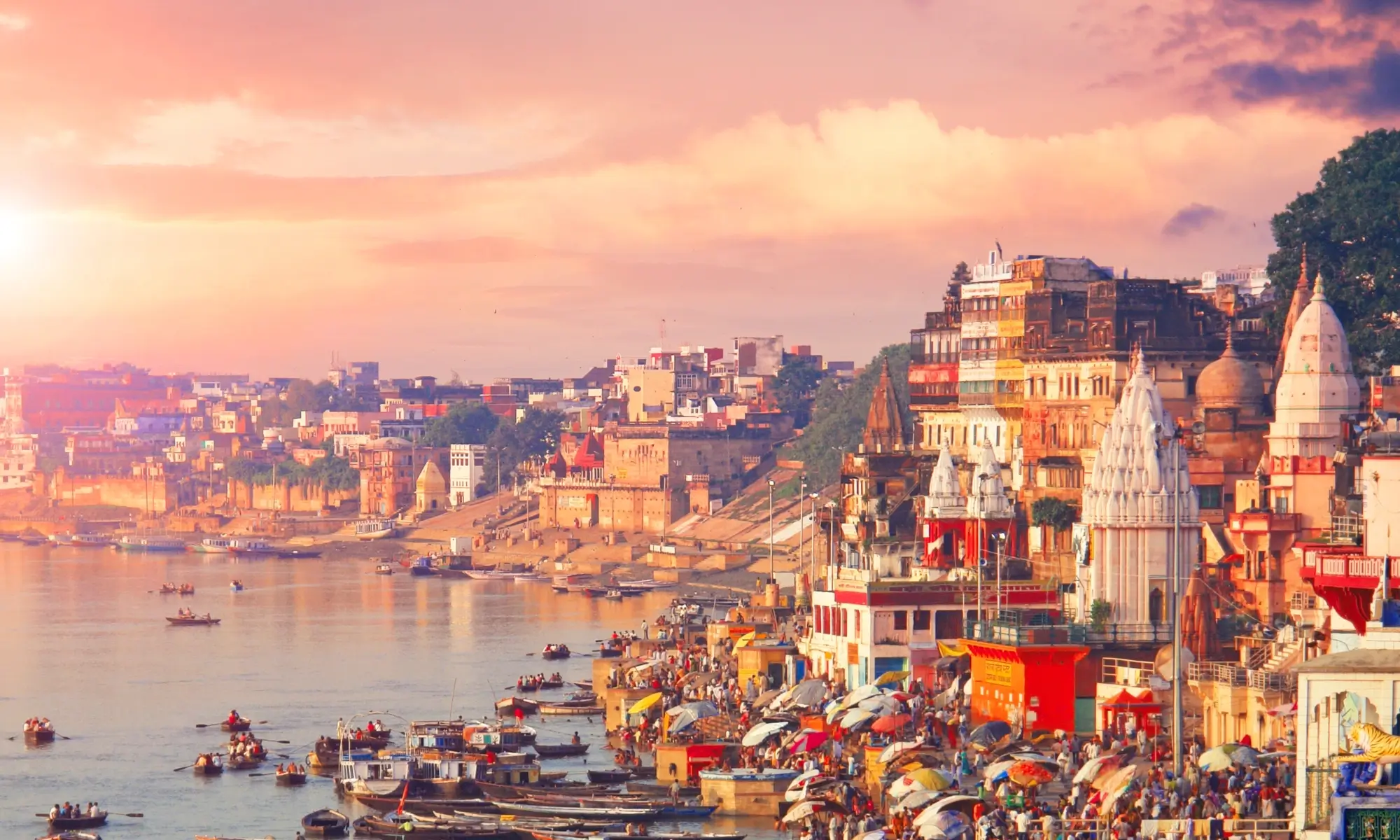
Varanasi rewards those who slow down and let the city reveal itself gradually, which happens to be exactly the pace that works best when you are traveling with elderly parents or young children. The challenge is not whether the city has enough to offer this kind of family group. It clearly does. The real work lies in navigating narrow lanes, steep ghat steps, and dense crowds in a way that keeps everyone comfortable rather than exhausted. This guide walks through what actually matters when planning a Varanasi family trip with both generations in tow, from the moment you land to the small logistics that make or break a single day.
Why Varanasi Needs Extra Planning for Mixed-Generation Groups
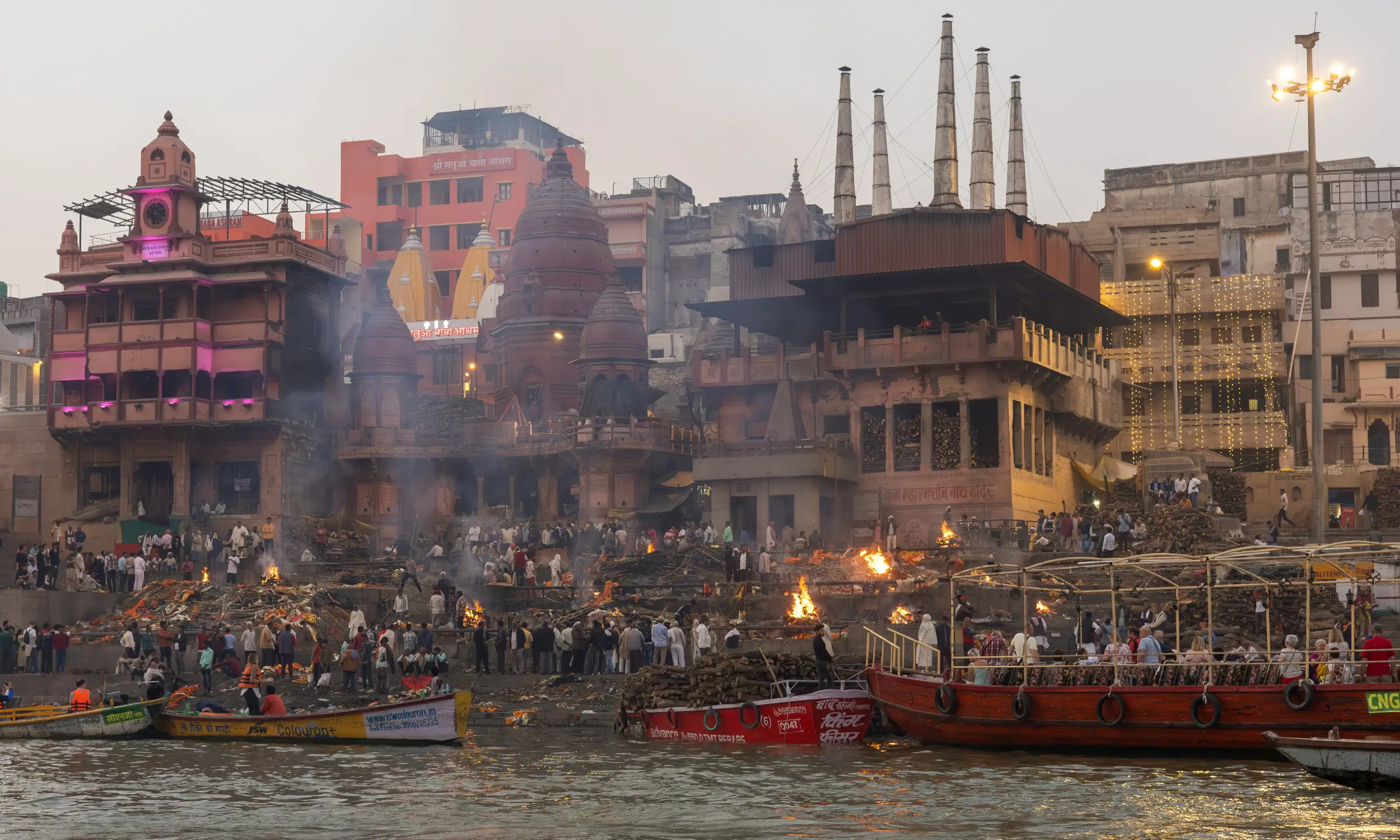
Most guides on Varanasi are written for solo backpackers or young couples who can climb uneven steps, push through crowds, and adjust plans on the fly. None of that applies neatly to a trip involving a grandparent with knee pain and a six-year-old who tires by mid-afternoon. The old city's lanes are often too narrow for a car, its ghats were built as steep stone staircases centuries before anyone thought about railings, and its most famous experiences, the temple and the evening aarti, both involve significant crowds and waiting. None of this makes the city unsuitable for a family tour to Varanasi. It simply means the itinerary has to be built around comfort and pacing rather than around seeing the maximum number of sights.
Choosing the Right Time to Visit
Timing shapes nearly everything else about this trip. The best time to visit Varanasi with family falls between October and March, when daytime temperatures generally sit between 10 and 25 degrees Celsius, comfortable enough for an early ghat visit without exhausting anyone before breakfast.
Summer months push temperatures well past 40 degrees Celsius, a real health risk for elderly travelers and simply miserable for children spending long stretches outdoors. The monsoon season, roughly July through September, floods parts of the lower ghats entirely and makes the remaining stone steps considerably more slippery.
Within the cooler months, avoid major festival periods like Dev Deepawali unless your family specifically wants that experience, since the crowds during these events multiply well beyond the city's usual bustle and can overwhelm anyone with mobility concerns or young children in tow. Weekday visits, where your schedule allows it, are noticeably calmer than weekends at every major site.
Getting There and Getting Around
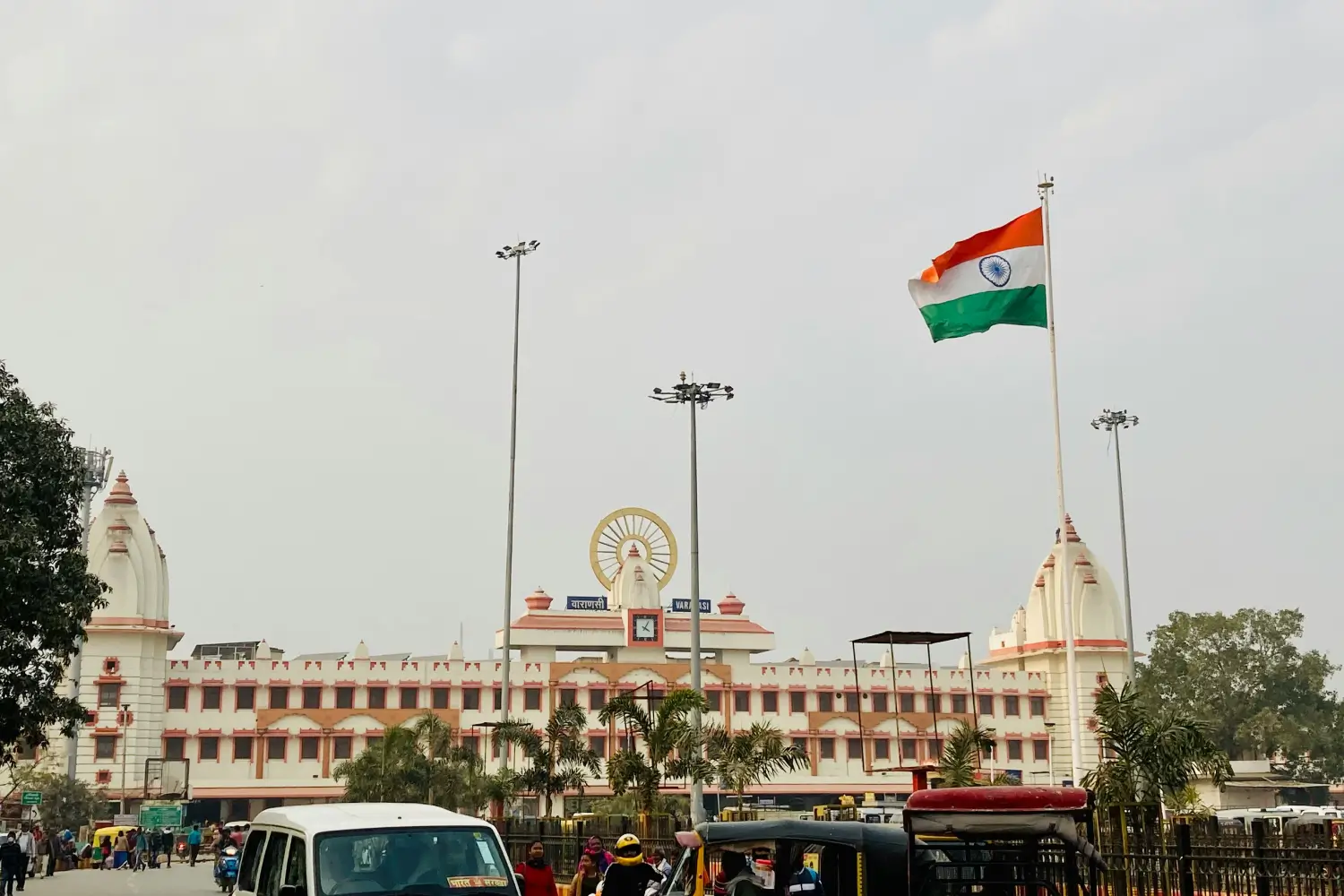
Varanasi is served by Lal Bahadur Shastri International Airport, roughly 25 kilometers from the city center, a drive of about 45 minutes to an hour depending on traffic. Pre-book a private airport transfer through your hotel rather than arranging transport on arrival, since this removes one entire layer of stress from a trip that already involves careful logistics for elderly parents or tired children after a flight.
Within the city, the old quarter's narrow lanes mean no vehicle, however small, can reach most of the riverfront directly. Expect to walk the final stretch to any ghat regardless of how you travel. For everything else, book a private car with a driver rather than relying on shared autos or cycle rickshaws, which offer little protection from heat, dust, or uneven roads. A car with good air conditioning and adequate legroom matters more here than in most Indian cities, simply because so much of the rest of the day already involves walking on foot.
| Transport Option | Best For | Consideration |
|---|---|---|
| Private car with driver | Airport transfers, hotel to Ghat area | Cannot enter old city lanes directly |
| Walking | The final stretch to any ghat | Uneven surfaces, plan for rest stops |
| Private boat | Riverfront sightseeing | Most comfortable option for limited mobility |
| Cycle rickshaw | Short old-city stretches | Less comfortable, not ideal for elderly parents |
Where to Stay: Accessibility Should Drive the Decision
Accessible accommodation in Varanasi is not a given, since many heritage properties near the ghats occupy centuries-old buildings with narrow staircases and no elevators. Before booking, confirm specifically whether the property has a working lift, ground-floor or low-floor rooms available, and step-free access from the entrance, rather than assuming a hotel marketed as heritage or boutique will accommodate mobility needs.
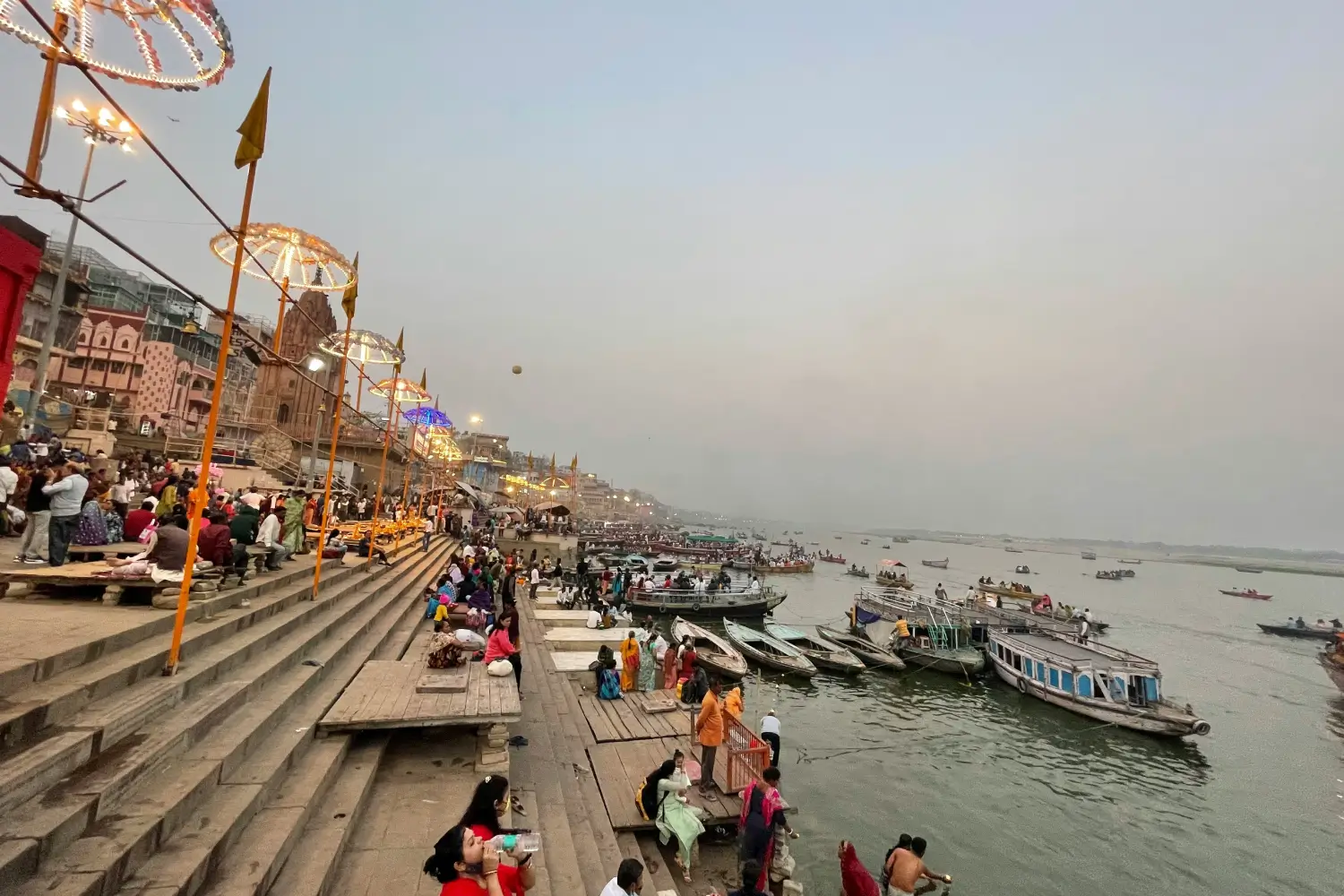
Staying near Assi Ghat is generally a better choice for families with elderly parents than staying deep within the old city near Dashashwamedh or Manikarnika, since Assi Ghat sits on comparatively wider, more vehicle-accessible roads, cutting down the walking distance required to reach your room after a long day. A handful of modern hotels along the Cantonment area offer full accessibility and easy vehicle access, at the cost of being a short drive rather than a walk from the ghats themselves. Whichever you choose, request a room away from the main road if street noise is likely to disturb light sleepers, since Varanasi's traffic and temple sounds start early.
Best Places to Visit in Varanasi with Family
- Assi Ghat and Dashashwamedh Ghat lead the list for their broader stone terraces and easier walking approaches.
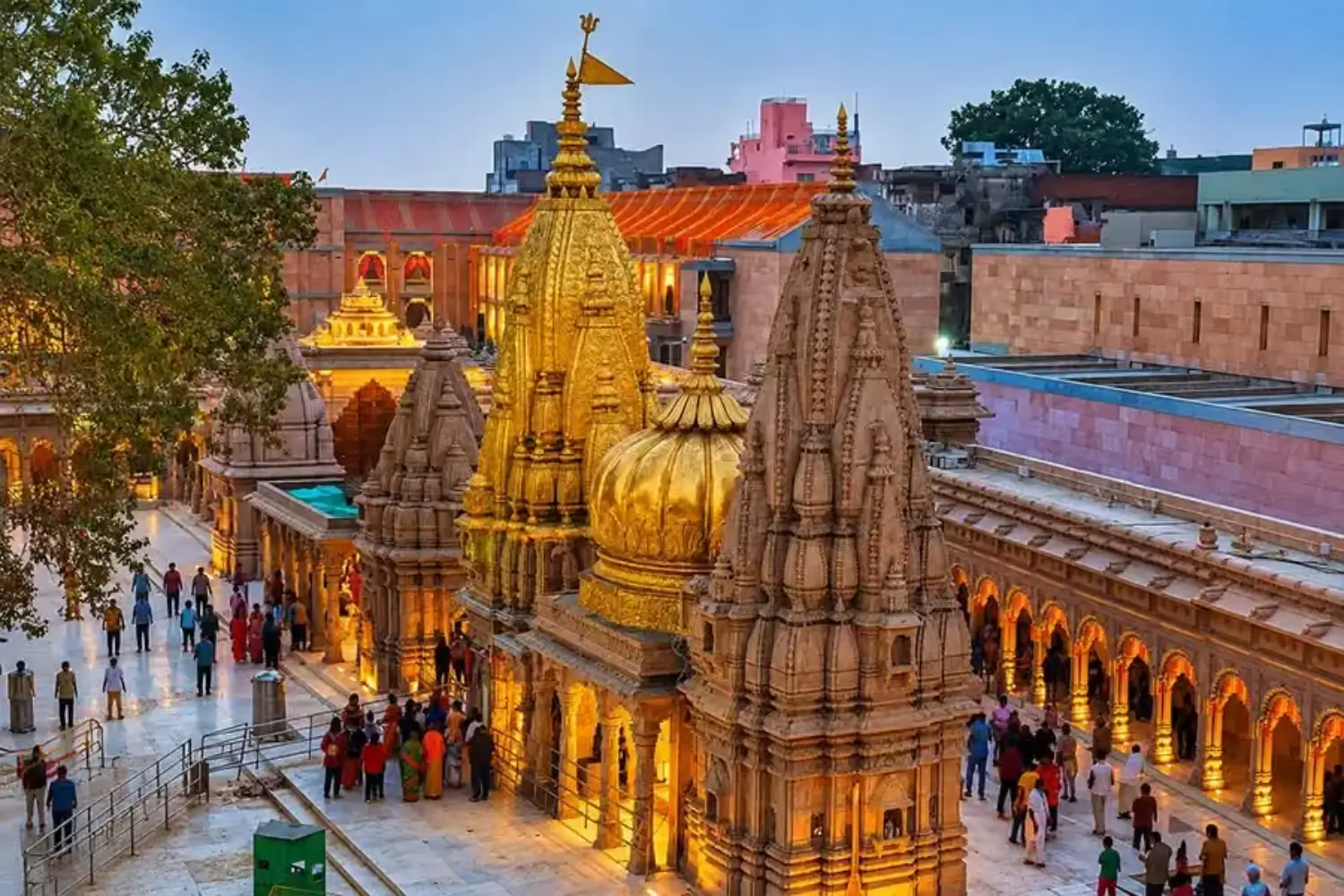
- The Kashi Vishwanath Temple is a must-visit but requires advance planning for elderly travelers, covered in detail below.
- Sarnath, roughly 10 kilometers from the city center, offers flat, well-paved grounds and quiet Buddhist stupas that are considerably gentler on both grandparents and children than the old city's steep lanes.
- Bharat Mata Temple, Ramnagar Fort across the river, and the Banaras Hindu University campus round out the list of comfortable stops that don't demand extended walking or dense crowd navigation.
Managing the Ghats with Limited Mobility
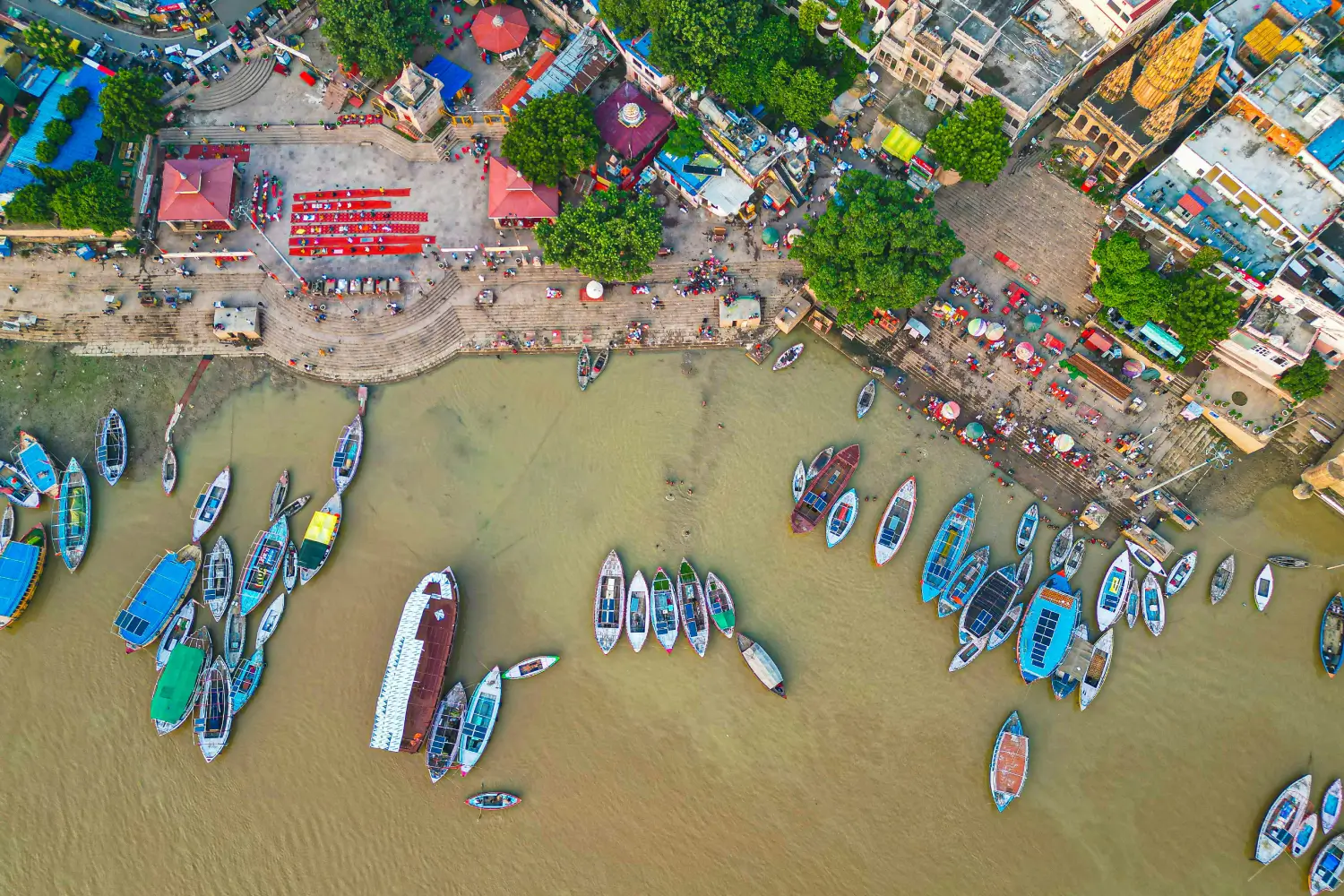
The ghats are the heart of any Varanasi visit, but they were built as steep stone staircases, not with modern accessibility in mind. For elderly parents with joint pain, balance concerns, or limited stamina, a few adjustments make a significant difference.
- Choose broader, more gently sloped ghats like Assi or Dashashwamedh over the narrower and steeper stretches further along the riverfront.
- Bring a lightweight folding cane or walking stick even for parents who don't typically need one at home, since the uneven, worn stone surfaces behave differently from flat pavement. Time your ghat visits for cooler parts of the day, and always allow for rest breaks on the steps themselves rather than pushing through to a fixed schedule.
- A folding stool or portable seat cushion, mentioned again in the packing list below, is genuinely useful here.
The Boat Ride: Often the Easiest Way to See the City
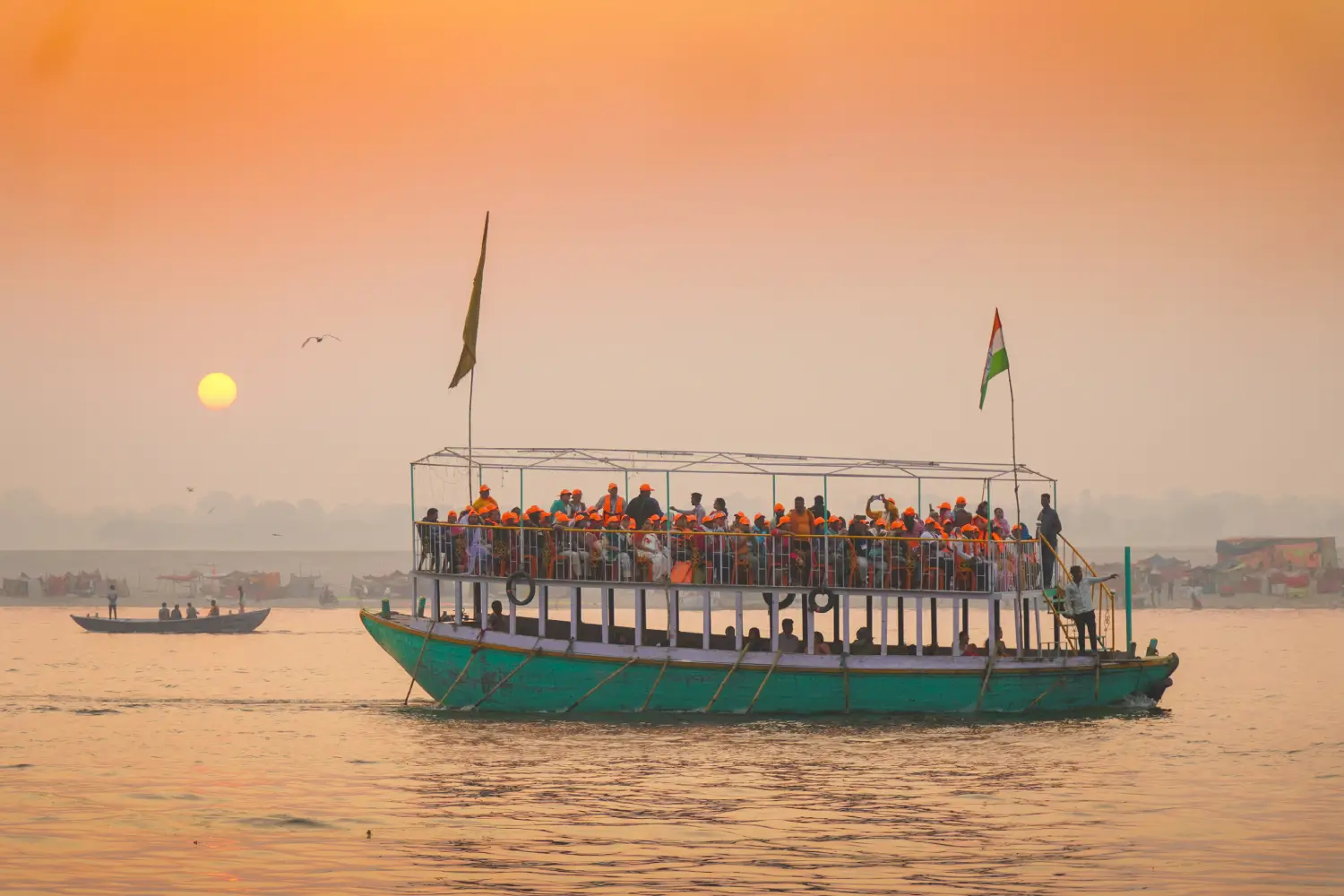
For families managing mobility limitations, a private boat ride for the elderly and children is frequently the most comfortable way to experience Varanasi's riverfront, since it removes the need to navigate crowded steps and narrow lanes entirely. Once seated, everyone can take in the ghats, the temples, and the daily rituals along the river without the physical demands of walking.
Book a private boat rather than a shared one, since it allows boarding at a comfortable pace, gives you control over how long the ride lasts, and avoids the jostling that comes with a shared vessel. Choose a boat with stable, wide seating over a narrow traditional rowboat, confirm that life jackets are available in appropriate sizes for children, and consider a morning ride over the evening aarti, since the calmer water and thinner crowds at sunrise are considerably gentler on both very young and older travelers.
Ganga Aarti Timings and Crowd Management
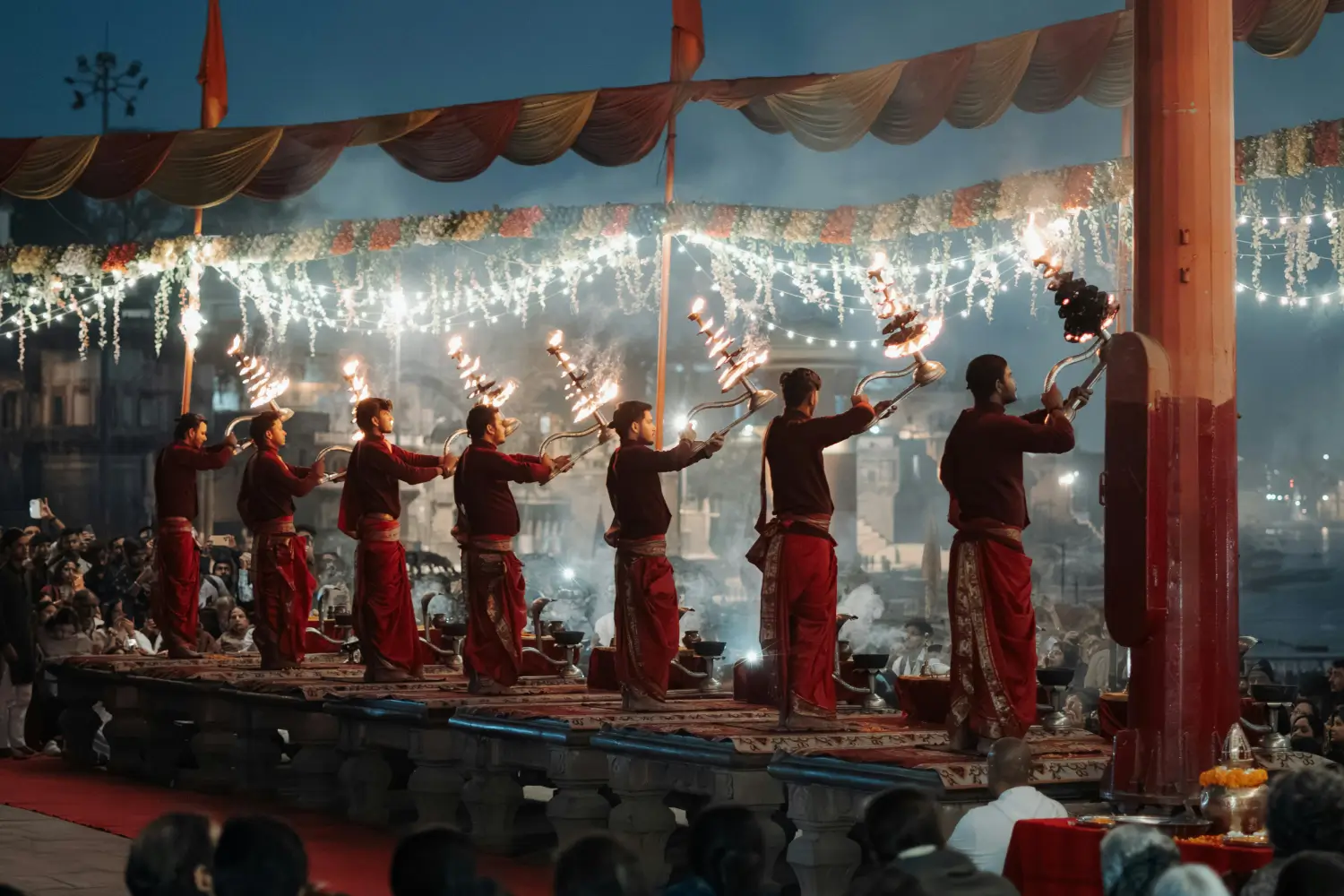
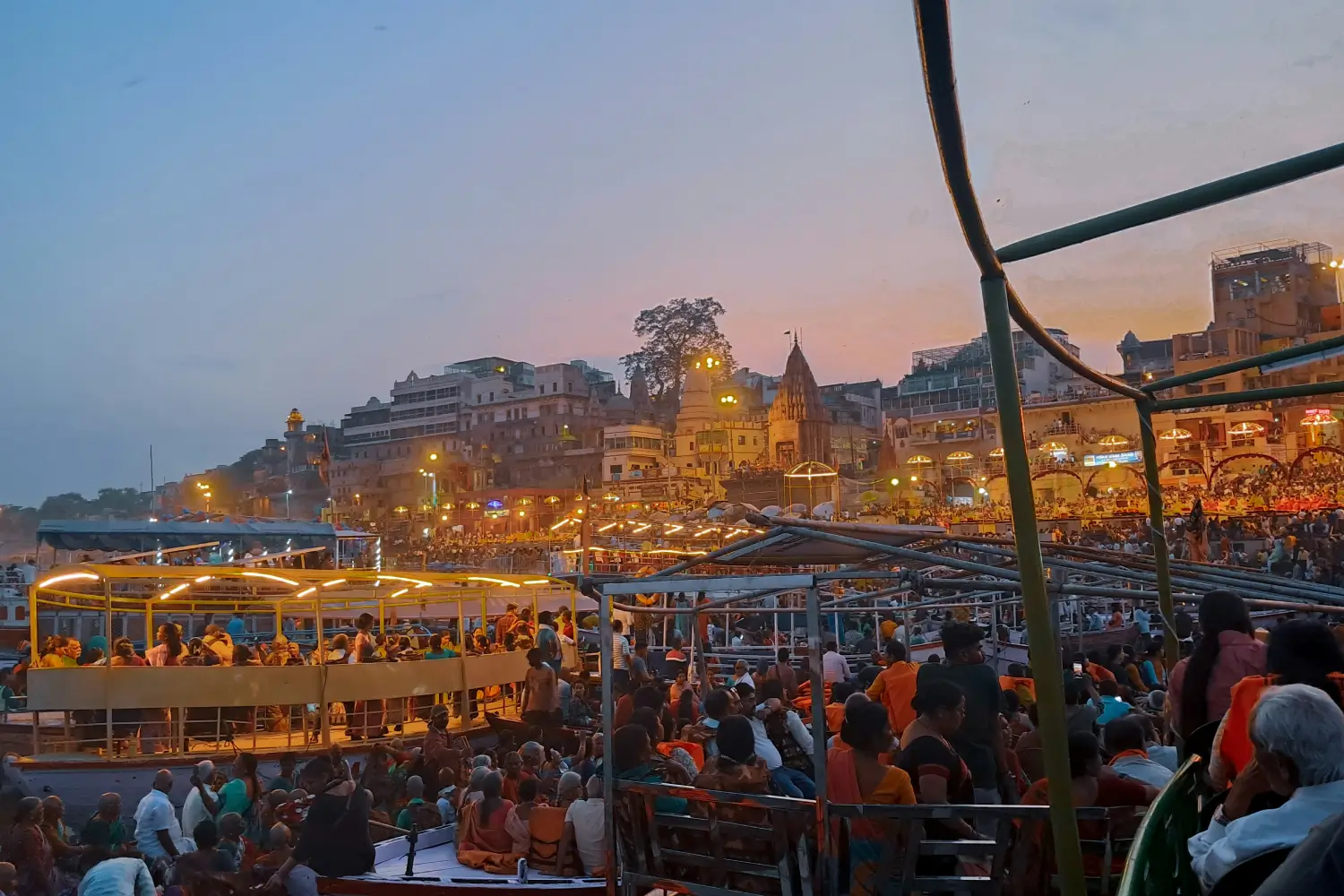
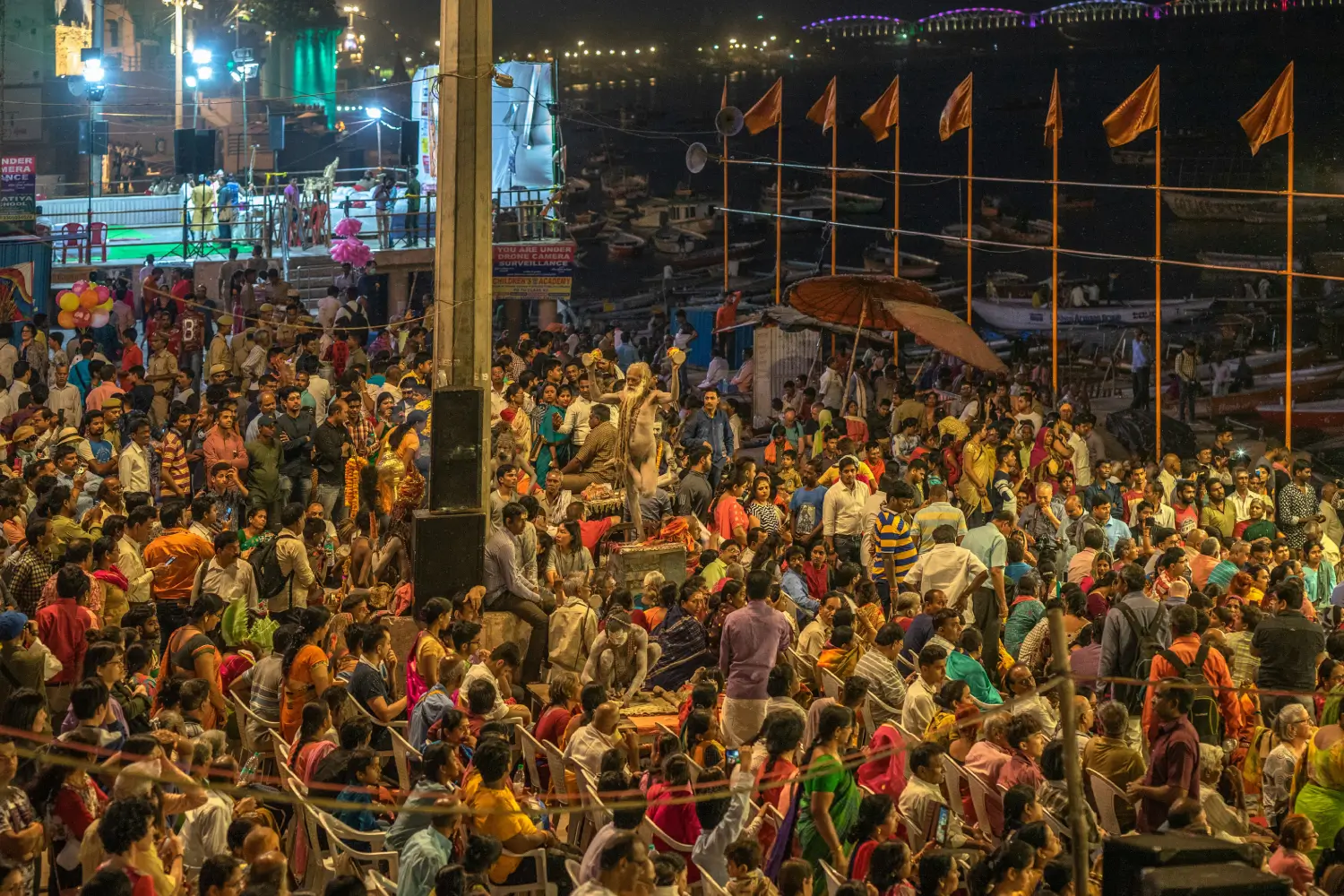
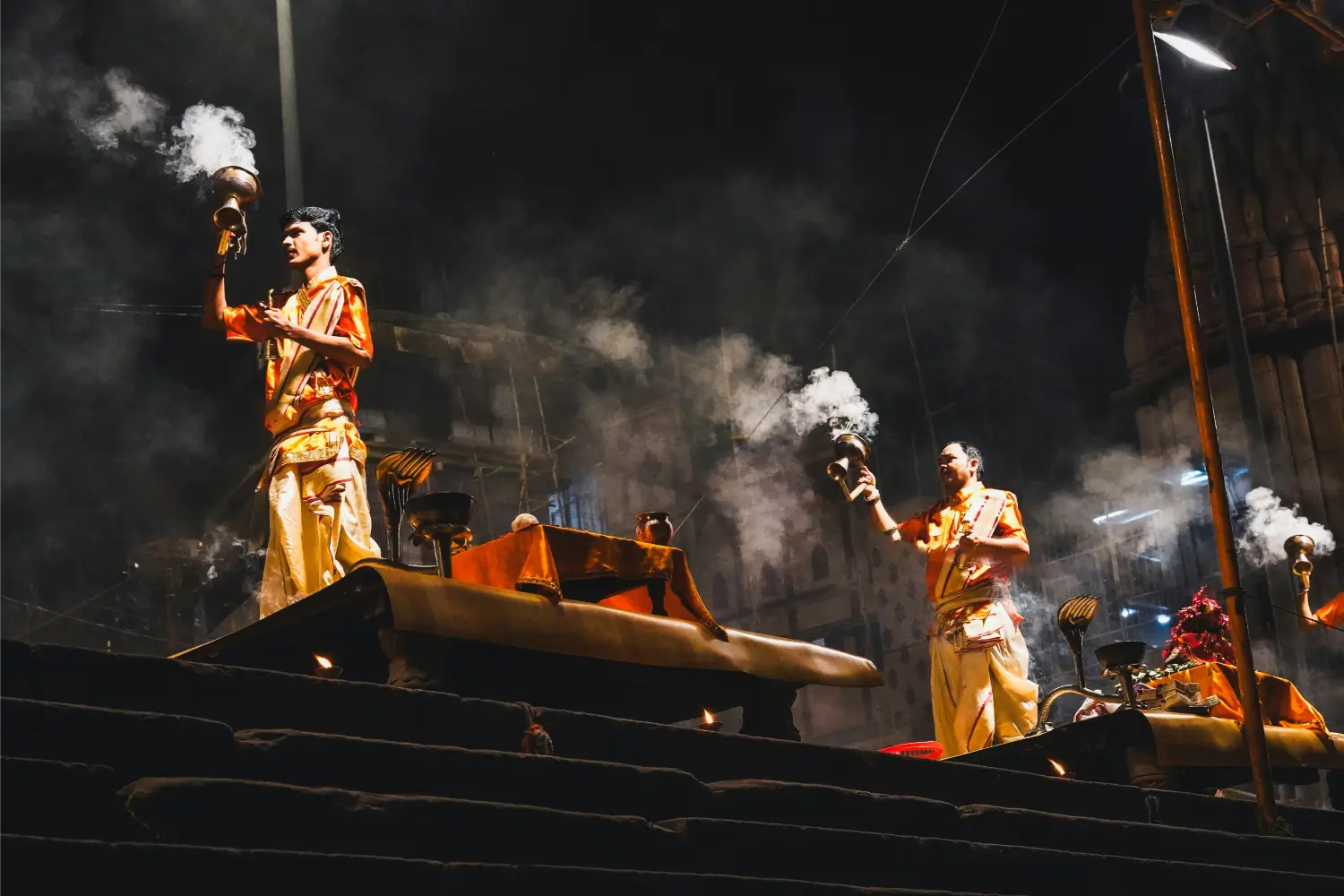
The evening Ganga Aarti at Dashashwamedh Ghat is one of Varanasi's most memorable experiences, but it also draws large, tightly packed crowds that can be difficult for elderly parents or small children to navigate on foot. Ganga Aarti timings shift with the season, generally starting around 6:30 PM to 7:00 PM in winter and slightly later in summer. Watching the ceremony from a boat, positioned just offshore, gives you a clear view without the physical strain of standing in a dense crowd for the better part of an hour.
If you do choose to watch from the ghat steps directly, arrive at least 1-3 hours early to secure a seated spot near the edge of the crowd rather than in the middle of it, and keep a close eye on children in the dense press of people as the ceremony reaches its peak. A few operators also offer private balcony or rooftop seating near Dashashwamedh Ghat, which trades a bit of proximity for a calmer viewing experience.
Food, Water, and Health Precautions
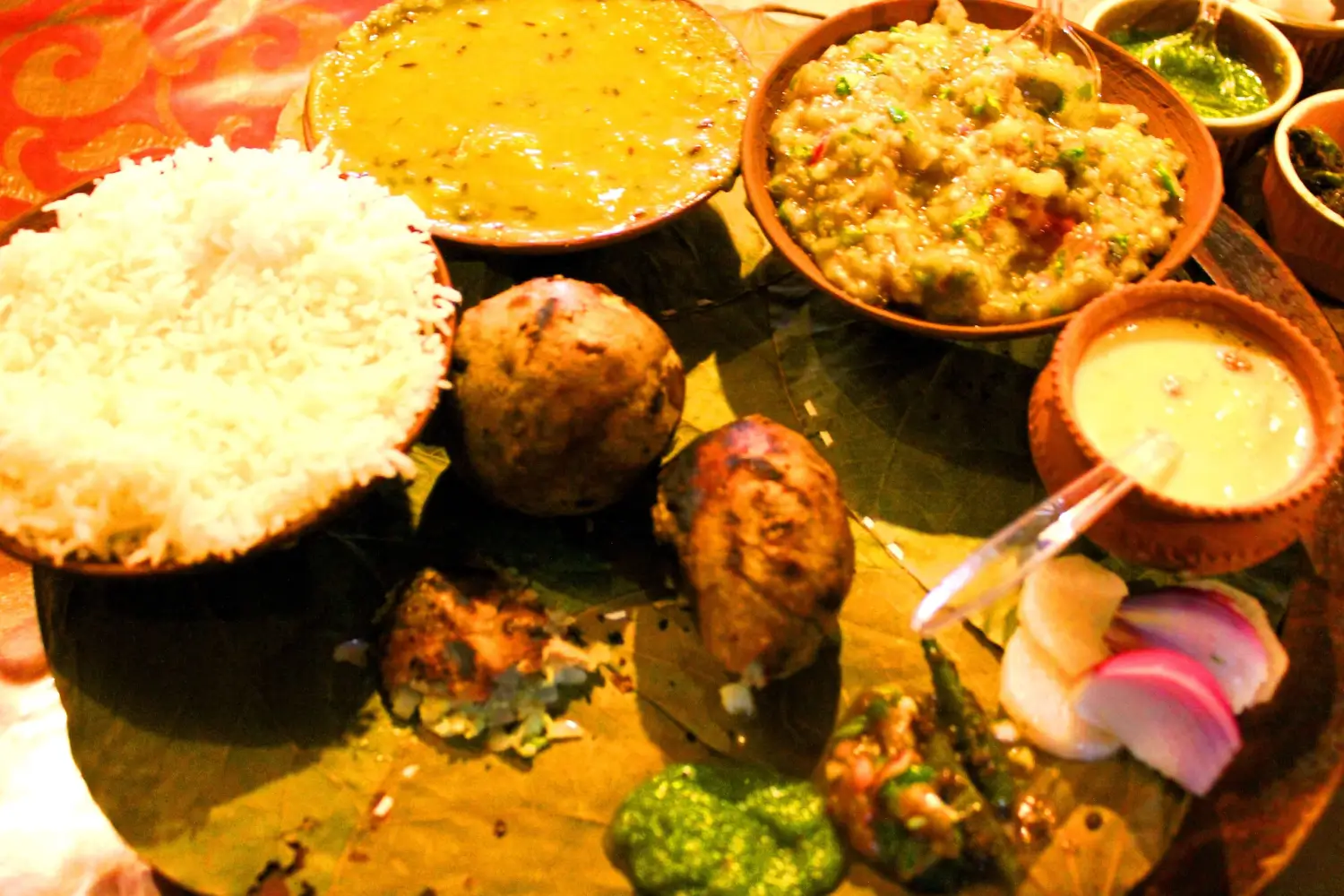
Varanasi's street food scene is a genuine highlight for many visitors, but a bit of caution goes a long way when traveling with elderly parents or young children. Stick to freshly cooked food served hot, avoid raw salads or cut fruit from street vendors, and carry sealed bottled water rather than relying on what is available at smaller eateries.
Pack a basic travel medical kit that includes any regular medications your parents take, oral rehydration salts, common fever and stomach upset remedies, and a mild antihistamine for children, since minor stomach upsets are common enough while traveling in North India that it pays to be prepared rather than searching for a pharmacy mid-trip. If either grandparent manages a chronic condition, carry printed prescriptions and enough medication to last a few days beyond your planned return, in case of any travel delays.
Sarnath from Varanasi: A Gentler Half-Day Trip
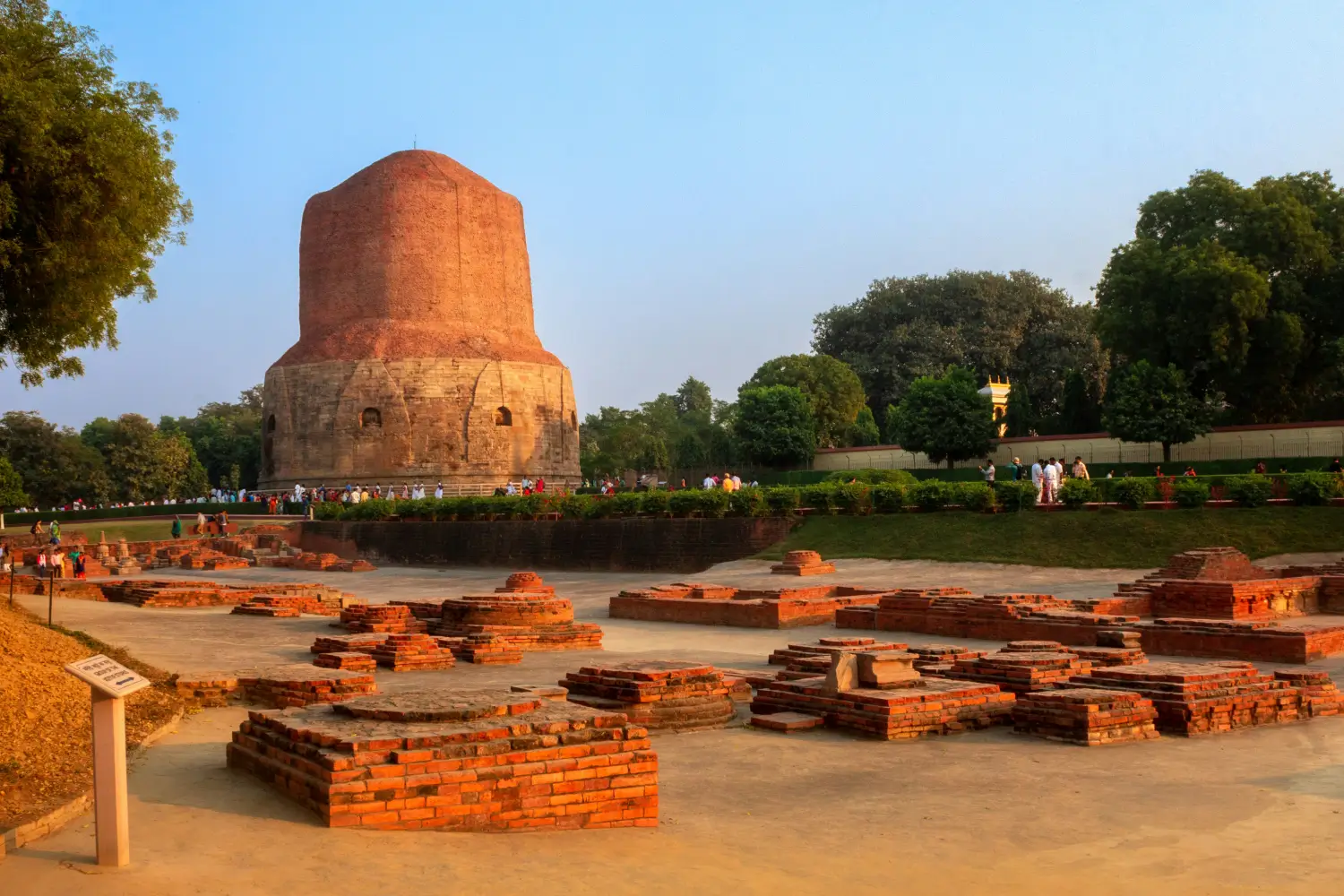
Sarnath from Varanasi deserves its own mention as one of the most family-friendly outings around the city. Sitting roughly 10 kilometers from the city center, Sarnath's wide, flat, well-paved grounds around the Buddhist stupas make it considerably easier for elderly parents and young children to explore than the old city's ghats and lanes. The Dhamek Stupa, the Sarnath Archaeological Museum, and the Mulagandhakuti Vihara can all be visited at a relaxed pace within a half-day trip, offering a calmer, greener counterpoint to the intensity of the ghats.
A Sample Varanasi Itinerary for 3 Days Built Around Comfort
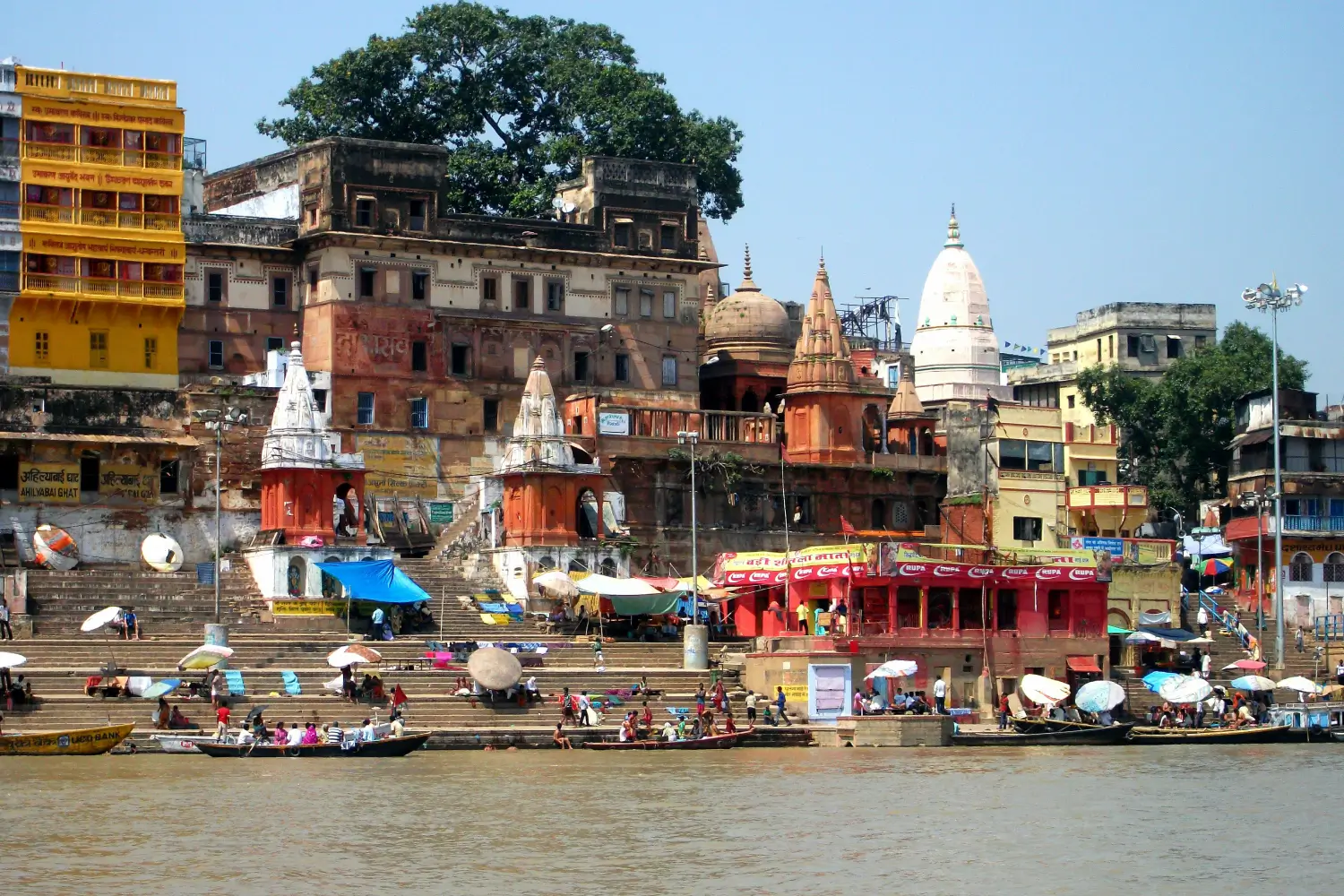
A Varanasi itinerary for 3 days is a comfortable minimum for a mixed-generation family trip. It allows enough time to cover the essentials without over-scheduling any single day.
| Day | Morning | Afternoon | Evening |
|---|---|---|---|
| Day 1 | Arrive, settle into the hotel, and have a short rest | Gentle walk along Assi Ghat, early dinner | Private boat ride near sunset, skip the crowded aarti steps |
| Day 2 | Early Kashi Vishwanath darshan with assisted entry, back to hotel to rest | Long midday break at the hotel | Evening aarti viewed from a private boat or balcony seating |
| Day 3 | Sarnath day trip, flatter terrain and far fewer crowds than the old city | Rest and packing | Simple dinner near the hotel, early night before departure |
Pacing the Day for Two Generations
The single most useful principle for a comfortable Varanasi itinerary for families is to avoid packing the day too tightly. Plan one major activity for the morning, ideally the sunrise boat ride or a ghat walk, followed by a genuine rest period back at the hotel before any afternoon or evening plans. Trying to fit a temple visit, a market walk, and an evening aarti into a single day usually exhausts elderly parents and overstimulates young children well before the day is done.
Build in flexibility for an unplanned break whenever someone in the group needs one, and resist the urge to see everything on a first visit. Varanasi rewards a slower, more selective itinerary far more than an exhaustive checklist approach.
What to Pack: A Fuller Checklist
- Comfortable, closed-toe walking shoes with good grip for the uneven ghat steps.
- A lightweight folding cane or walking stick, even for parents who don't usually need one.
- A folding stool or portable seat cushion for rest breaks on the ghats or during the aarti.
- Sun hats and sunscreen, useful even in the cooler months given long hours outdoors.
- Hand sanitizer and wet wipes, given general conditions along the riverfront.
- A basic travel medical kit, covering regular medications, rehydration salts, and common stomach remedies.
- Modest clothing covering shoulders and knees for temple visits.
- A small cloth or cross-body bag for valuables, since larger bags aren't permitted inside temples.
- Printed copies of hotel details, emergency contacts, and any prescriptions, in case phones are temporarily unavailable during a temple visit.
- Cash in small denominations, since boatmen and smaller vendors often can't provide change for large notes.
A Few Honest Final Tips
- Book a local guide for at least one day, since navigating both the practical logistics and the cultural context of the ghats is considerably easier with someone who knows the city well, particularly when you are managing the needs of both grandparents and grandchildren at once.
- Keep evenings relatively unstructured after the main aarti or dinner plan, and don't feel obligated to walk the full length of the ghats on foot when a boat ride can cover the same ground far more comfortably.
- Varanasi is, at its core, a city best experienced slowly and with an open mind rather than a fixed agenda. Traveling here with elderly parents and children simply means building that natural pace into your plans from the start, rather than trying to fit the city around a schedule it was never built for.
Recommended Reads
- Top Religious Places in Uttar Pradesh
- River Cruise Tourism in Varanasi
- Popular Tourist Attractions in Varanasi
- Varanasi: The World's Second Most Popular Religious Destination
- Kashi Sees Remarkable Tourism Boom
- Popular Attractions in Uttar Pradesh
- India’s Spiritual Express: Vande Bharat to Bridge the Spiritual Circuit
- Haridwar Kumbh Mela 2027
- Varanasi Emerges as a Global Hub for Spiritual Tourism
- 10 Iconic Personalities from Varanasi Who Made India Proud
- Laser Show Returns to Lalita Ghat: Kashi Vishwanath Dham’s Iconic Experience Is Back
- PM Narendra Modi Offers Prayers at Kashi Vishwanath
- 65 Lakh Devotees, One Sacred Surge: Kashi Vishwanath Sets a Historic Moment in Religious Tourism
- Ganga Mahotsav in Varanasi
- Boat Ride in Varanasi