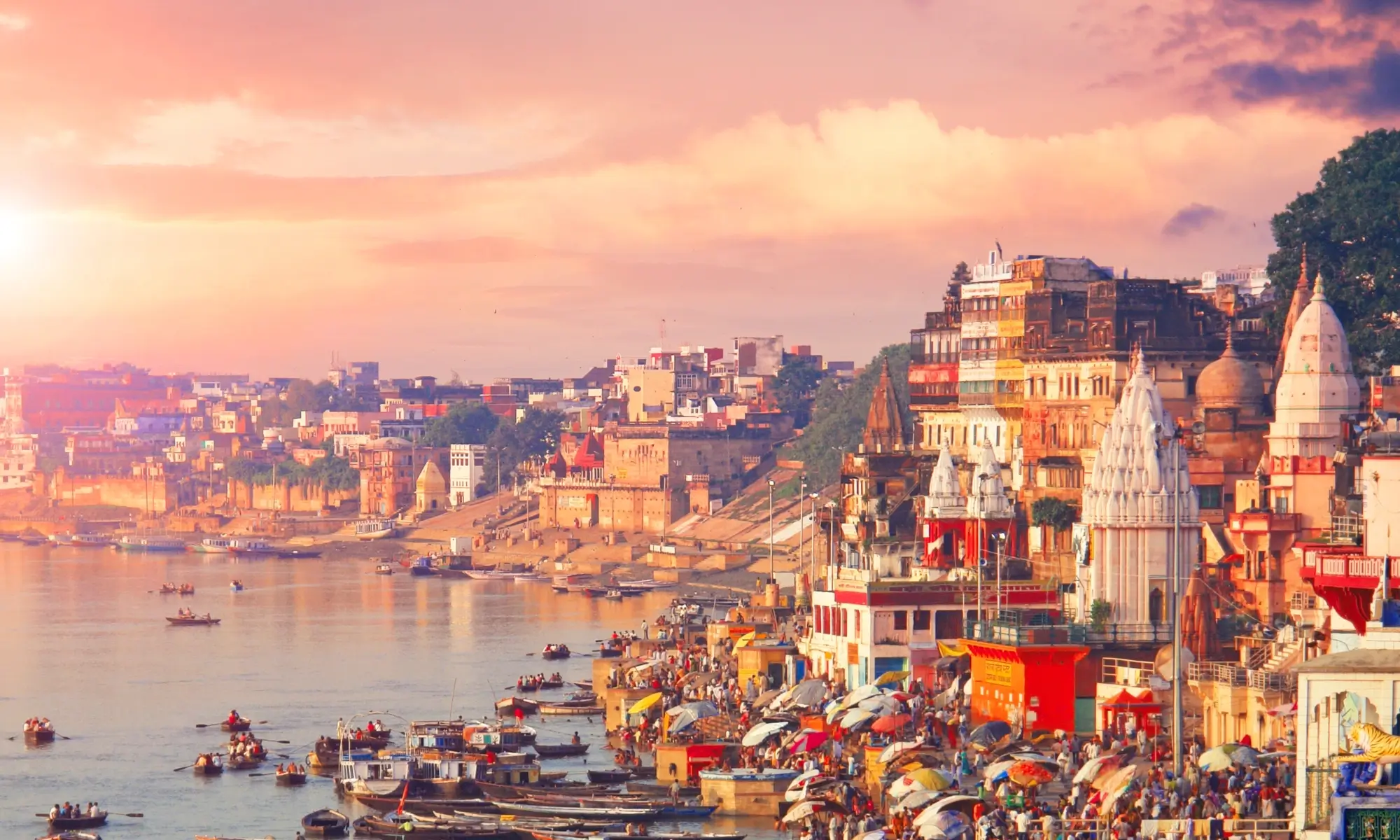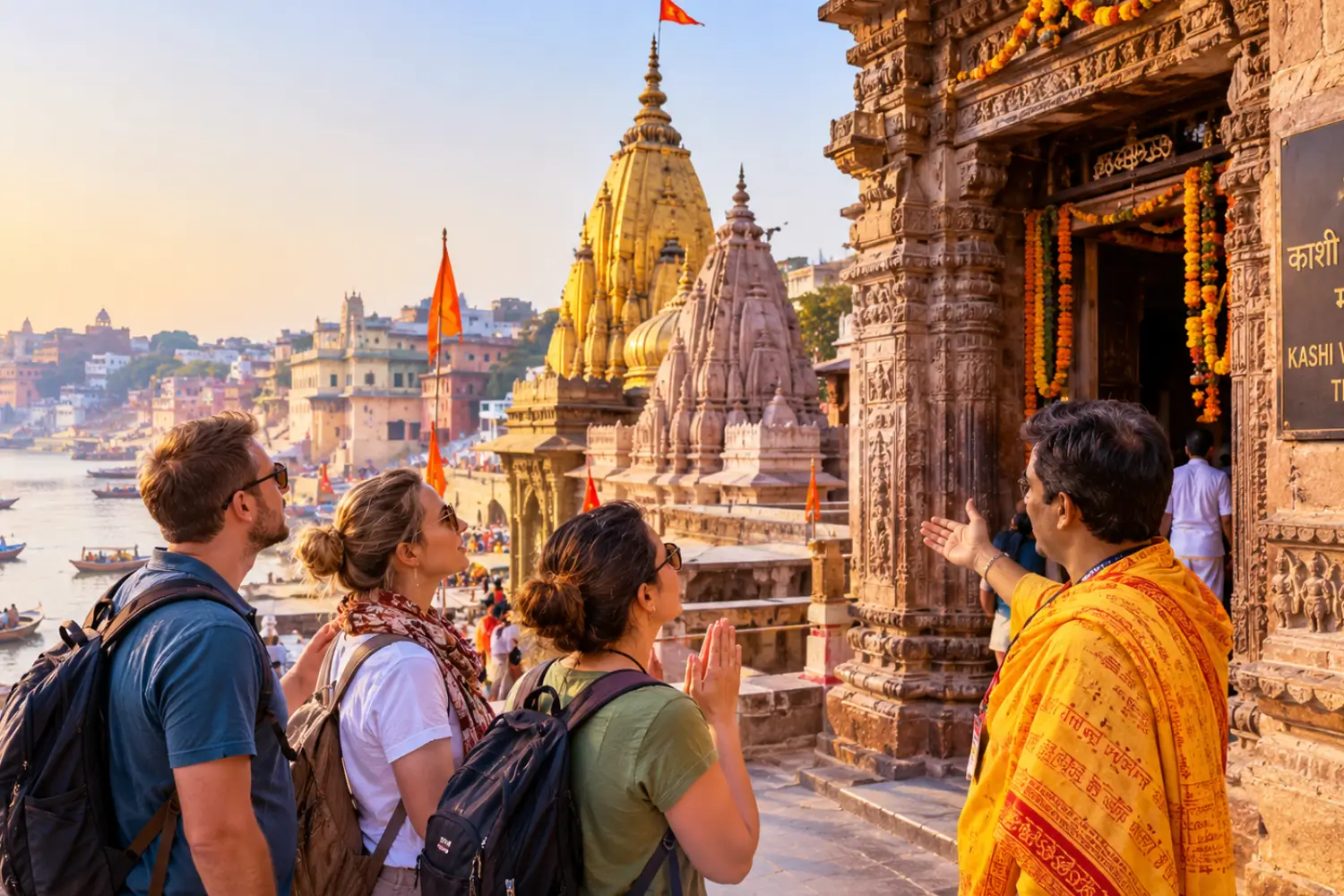
Thousands of foreign tourists visit Varanasi every year to experience the city's spiritual heritage. Moving through its temples respectfully means knowing the entry rules, dress codes, and cultural customs in advance. Most shrines welcome visitors of every nationality, but they remain living places of worship rooted in Sanatan Dharma traditions rather than ordinary tourist attractions. Foreign travelers must follow strict entry procedures around security, clothing, and photography to have a respectful and trouble-free visit. Understanding these boundaries lets visitors engage with the history and spirituality of the city without unintentionally causing offense.
This Varanasi travel guide for foreign tourists covers everything international travelers should know before visiting the sacred sites of Kashi, so the trip is easy to prepare for and comfortable to navigate.
Can Foreign Tourists Visit Temples in Varanasi?
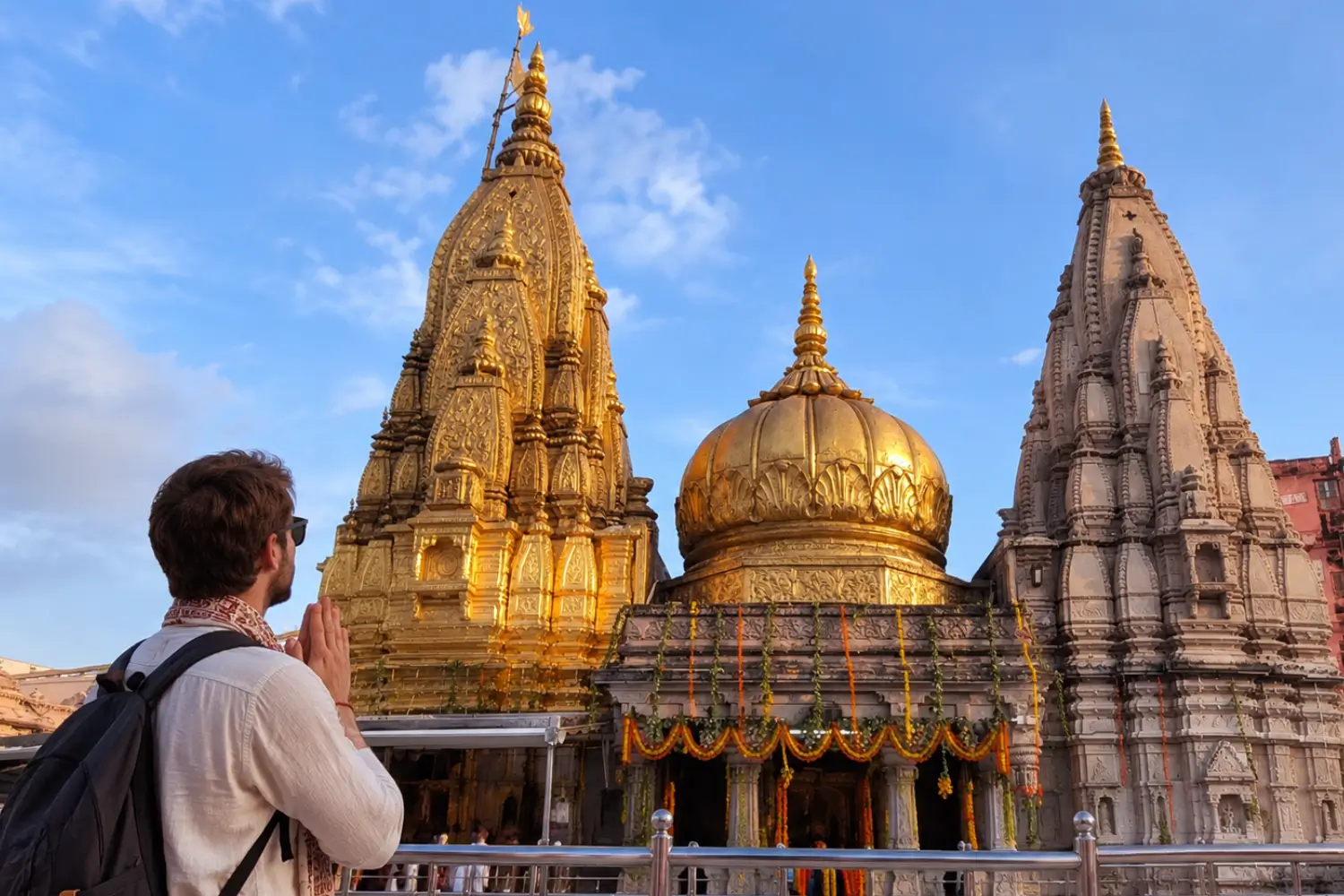
Yes. Foreign tourists are welcome at most Varanasi temples, including the Shri Kashi Vishwanath Temple, Sankat Mochan Hanuman Temple, and the New Vishwanath Temple at Banaras Hindu University (BHU). These sites are open to people of all nationalities and faiths. Visitors are expected to respect the sanctity of these spaces. While the outer courtyards and main complexes are open to international tourists, some specific rituals or innermost sanctums in traditional shrines may have restricted access. Being familiar with the Varanasi temple rules for foreigners avoids confusion at the entrance and keeps the visit smooth.
Important Rules for Foreign Tourists Visiting Varanasi Temples
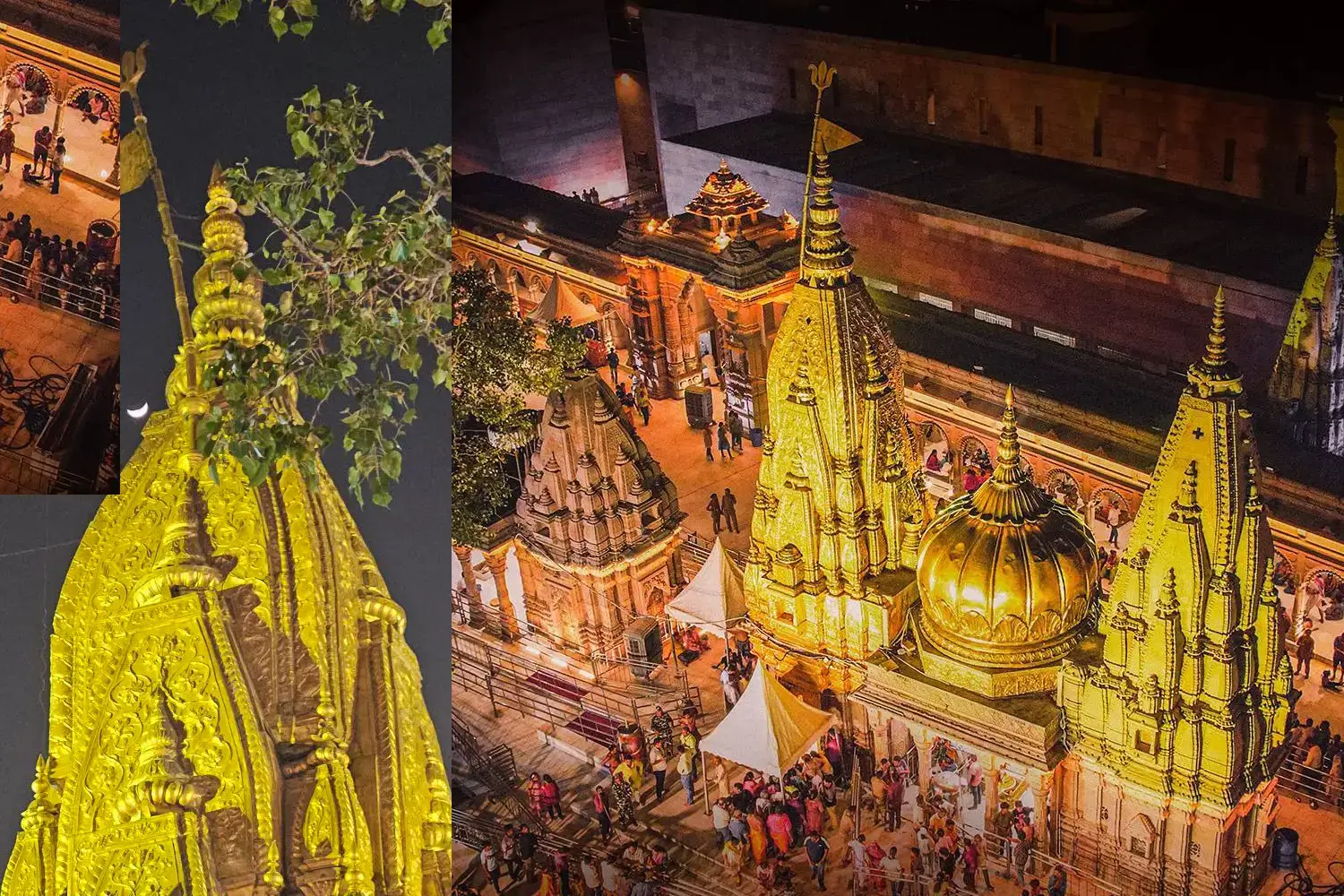
International visitors must follow specific regulations in Varanasi temples that maintain security and religious sanctity across the city's shrines:
- Foreign visitors to the Shri Kashi Vishwanath Temple are required to carry their original physical passport. Security staff at the help desk will verify the visa and record passport details before granting entry to the complex.
- Mobile phones, smartwatches, cameras, laptops, and large bags are strictly prohibited inside the major temples. Visitors should either leave these items at their hotel or use the paid lockers available outside the temple gates.
- Items made from animal leather, including belts, wallets, jackets, and bags, are not permitted inside Kashi Vishwanath, Sankat Mochan, and several other major temples, in line with the Hindu principle of Ahimsa (non-violence).
- Expect a thorough physical search and metal detector checks at every entry point. Follow the instructions of the security personnel without argument.
Dress Code for Visiting Varanasi Temples
The dress code for Varanasi temples is strictly enforced to maintain decorum. Both men and women must dress modestly, with shoulders, chest, and knees fully covered.
- Women should wear a saree, salwar suit with dupatta, or a long dress reaching the ankles. Tight or revealing clothing is not allowed.
- Men should wear a kurta-pajama, dhoti, or full-length trousers with a simple shirt or T-shirt.
- Shorts, miniskirts, ripped jeans, sleeveless tops, and beachwear are prohibited. Security staff will refuse entry to anyone dressed inappropriately.
Entry Rules at Popular Varanasi Temples

| Temple | Foreign Tourist Entry | Dress Code | Photography | Key Entry Rules |
|---|---|---|---|---|
|
Shri Kashi Vishwanath Temple |
Yes (Original passport required) |
Conservative; traditional preferred |
Strictly prohibited |
No mobiles, bags, or leather items. Security frisking mandatory. |
|
Sankat Mochan Hanuman Temple |
Yes |
Modest / conservative |
Strictly prohibited |
No electronics allowed. Prasad available at designated counters. |
|
Durga Kund Mandir |
Yes (Courtyard open to all) |
Modest / conservative |
Prohibited inside |
Dress respectfully. Non-Hindus sometimes restricted from the inner sanctum. |
|
New Vishwanath Temple (BHU) |
Yes |
Modest |
Allowed outside |
Open to people of all religions. Bags and phones generally allowed. |
|
Kaal Bhairav Temple |
Yes |
Modest |
Prohibited inside |
Expect heavy crowds. No leather items. |
Cultural Etiquette for Foreign Tourists in Varanasi Temples
Understanding basic Hindu etiquette goes a long way toward a respectful visit:
- Remove shoes and sandals before entering any temple grounds. Shoe deposit counters are available outside the major shrines.
- In Indian tradition, the left hand is considered impure for offerings, so always use your right hand when giving or receiving items such as prasad (sacred food), gifts, or money.
- Never sit with your feet pointed toward the deity. Cross your legs or tuck your feet underneath you instead.
- Stay quiet, do not interrupt anyone in prayer, do not walk between a devotee and the deity, and do not touch the idols unless a priest specifically invites you to.
Temple Rituals and Practices Foreign Tourists Should Know
International visitors will come across several traditional practices inside the complexes. Being familiar with them makes the visit more meaningful:
- Devotees walk clockwise around the main shrine as a mark of respect, a practice called Parikrama. Foreign visitors are welcome to take part by keeping the shrine to their right.
- The Aarti ceremony involves fire, chanting, incense, and the ringing of bells. Visitors are welcome to observe respectfully from the back.
- Priests often distribute prasad, a blessed sweet or piece of fruit. Accept it with your right hand and consume it.
- A priest may offer a tilak, a mark of sandalwood or vermilion paste on the forehead, as a traditional blessing.
Photography and Mobile Phone Rules in Varanasi Temples

Photography rules vary between sites, so exercise caution. At both the Shri Kashi Vishwanath Temple and the Sankat Mochan Hanuman Temple, all electronic devices, including mobile phones and cameras, are strictly prohibited. Paid lockers are available outside the entrances for a small charge, where tourists can safely store their belongings. Where photography is permitted in an outer courtyard, such as at the New Vishwanath Temple, visitors must never photograph the inner sanctum or the main deity, since this is considered deeply disrespectful. Always ask before photographing local devotees, priests, or ongoing ceremonies.
What Foreign Tourists Should Know Before Visiting Varanasi Temples?
- Crowds are especially heavy during festivals, on Mondays, and in the early morning. Expect long, slow-moving queues inside the temple corridors.
- Carry small amounts of Indian Rupees in cash. Public lockers, shoe deposit counters, and voluntary donations all require cash payment.
- Ignore any unofficial guides or street vendors offering paid shortcuts or fake VIP access. Official VIP darshan bookings can only be arranged through the temple help desk or the authorized online booking channel.
- Wear comfortable slip-on shoes that can be removed easily. Many lanes leading up to the main shrines are pedestrian-only and have uneven surfaces.
- Foreign nationals must always carry their original passport. High-security temples like Kashi Vishwanath require document verification and registration before granting entry.
- Travel light. Fewer bags and electronics mean less time spent at the cloakroom and a faster entry.
Common Mistakes Foreign Tourists Should Avoid
- Wearing shorts or sleeveless tops. Security will refuse entry without exception.
- Arguing with security about prohibited items or passport checks at high-security temples like Kashi Vishwanath. This will only delay the queue.
- Public displays of affection such as hugging, kissing, or holding hands inside temple premises. These are culturally inappropriate and should be avoided.
- Loud conversation, disruptive photography, or treating active places of worship as tourist attractions.
Tips for a Respectful Temple Visit in Varanasi

- Arrive between 5:00 AM and 7:00 AM to avoid the biggest crowds and take in the morning Aarti in a calmer atmosphere.
- For complex sites like Kashi Vishwanath, an official guide can walk you through the security lockers, passport checks, and designated paths for foreign visitors, saving considerable time.
- If you are unsure how to behave in a specific setting, step back and observe how local devotees are participating. Copying respectful behavior is the easiest way to blend in.
- Leave bags, electronics, and valuables at your hotel to skip the locker queue entirely and streamline your entry.
Recommended Reads
- Top Religious Places in Uttar Pradesh
- River Cruise Tourism in Varanasi
- Popular Tourist Attractions in Varanasi
- Varanasi: The World's Second Most Popular Religious Destination
- Kashi Sees Remarkable Tourism Boom
- Popular Attractions in Uttar Pradesh
- India’s Spiritual Express: Vande Bharat to Bridge the Spiritual Circuit
- Haridwar Kumbh Mela 2027
- Varanasi Emerges as a Global Hub for Spiritual Tourism
- 10 Iconic Personalities from Varanasi Who Made India Proud
- Laser Show Returns to Lalita Ghat: Kashi Vishwanath Dham’s Iconic Experience Is Back
- PM Narendra Modi Offers Prayers at Kashi Vishwanath
- 65 Lakh Devotees, One Sacred Surge: Kashi Vishwanath Sets a Historic Moment in Religious Tourism
- Ganga Mahotsav in Varanasi
- Boat Ride in Varanasi
- Varanasi Temples for Foreign Tourists: Rules, Dress Code, Entry & Cultural Etiquette